How to Create a Sales Enablement Content System That Increases Close Rates
Note: This article was first published on HackerNoon in March 2023. Updated May 2025.
In 2022, the lead content strategist at an agency I worked with complained about our work. One of our loyal clients had stagnating conversion rates despite an increase in organic traffic.
The Problem:
On one of their sales calls, they realized that people had questions about how to use specific features to achieve a specific result they claimed the product helped with.
Until that call, users didn’t understand how the feature worked until they used the software.
This was a friction that needed to be addressed.
At the time, I was a skilled writer with ideas about content marketing and strategy. My portfolio isn’t what it looks like right now, but I had a boss who respected my ideas.
I told him that we can listen to some of the callers’ objections from sales calls and create content that addresses whatever complaint they have. In other words, content that shows the reader how to use the software for their specific use case.
I told him I’ll figure out the keywords to optimize for these “pieces,” and even if the content doesn’t rank organically, the sales team can refer prospects to these content assets. They can also repurpose and distribute them as they deem fit.
Over the next few weeks, we gathered questions, identified the pain points, and created content that addressed them.
As I gained more experience, I realized that case studies and comparison articles are good. But users need to see the product in action. And that’s a better way to market a software product.
The upside? More talking points for the same team. Prospects can also self-educate at their own pace by going through your content library or the internal links in your articles.

5 Strategies to Create Content That Empowers Your Sales Team
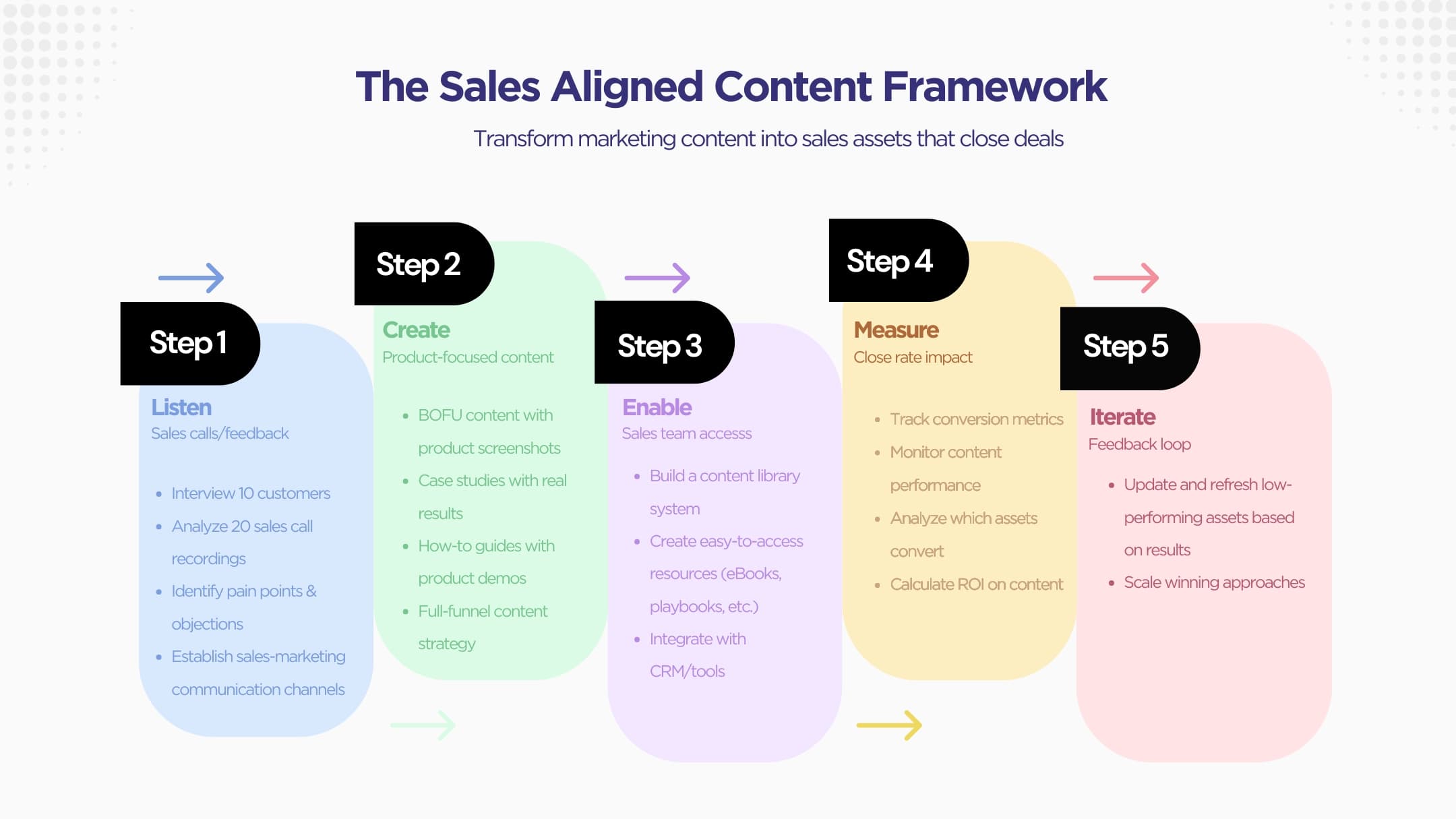
Niels van Melick, agency founder of Leadwave, says that the first thing he would do as the CMO of a B2B company is to interview 10 customers, analyze 20 recent sales call recordings to identify their pain points, and collect feedback.

After doing these, including developing content pillars, do the following:
1. Create Communication Channels Between the Sales and Marketing Teams
Unless your prospects or customers know you personally, your support and sales team are the closest to them. They answer questions about what a feature does or how the product can help your users.
To make their work easy, ask your sales team what the usual queries are and “develop content pillars and topics that revolve around these pain points and objections,” says Niels.
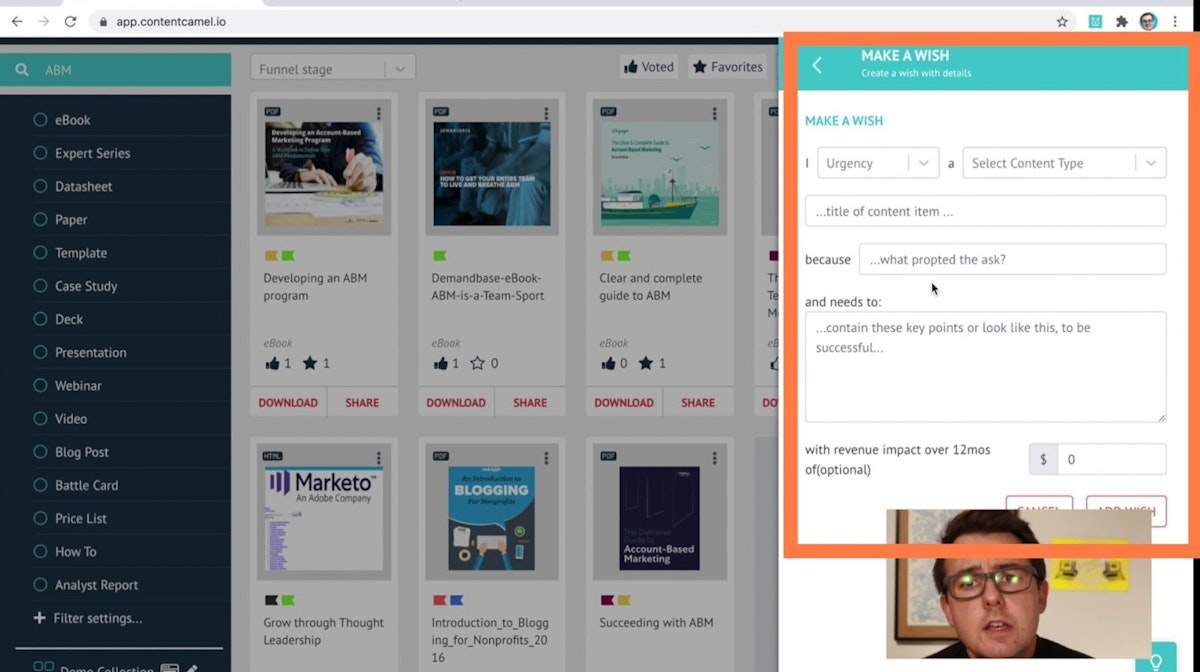
You can do this manually over Slack, and you can also use software I discovered back in 2022. Content Camel, the software, syncs communication between sales, growth and the marketing team.
This way, the sales and growth teams can make content requests (because there is no asset for a pain point). They can also see which topics/content the marketing team has published, and can easily pull from the content library while talking to a lead.
Here’s how to make a request for a blog post:
Here is an overview of the software:
When that’s done, create content that shows how the product works.
2. Create Bottom-Of-The-Funnel (BOFU) Content That Shows How the Product Works.
I read a blog post from a SaaS company about customer onboarding processes.
The piece explained how SaaS brands can onboard new customers, but didn’t mention how their product helps. The writer, instead, wrote a paragraph about how the product works at the foot of the article, where fewer readers care.
That’s not the purpose of BOFU content.
But I’m not surprised. One common problem I see on blogs is that the content doesn’t weave the product/service into the piece, so readers pass by the anchor text that’s supposed to convert.
That’s why I follow a different process: I use the product, take screenshots, and include them while writing an article. I did it in this article and a comparison post on ClickUp vs Notion for my client.

The best BOFU pieces explain how readers can tackle a challenge and show how the product can help them tackle it.
Your product-led how-to content should include screenshots, GIFs, links to relevant pages, and short videos of your product in action. Basically, show how your product helps your target audience.
In a 2023 announcement, Salesforce revealed its plans to integrate ChatGPT into Slack direct messages (DMs). To illustrate how this integration will work, they did a GIF:

They knew that including visuals about how a product works, according to Venngage, could increase interest in the product.
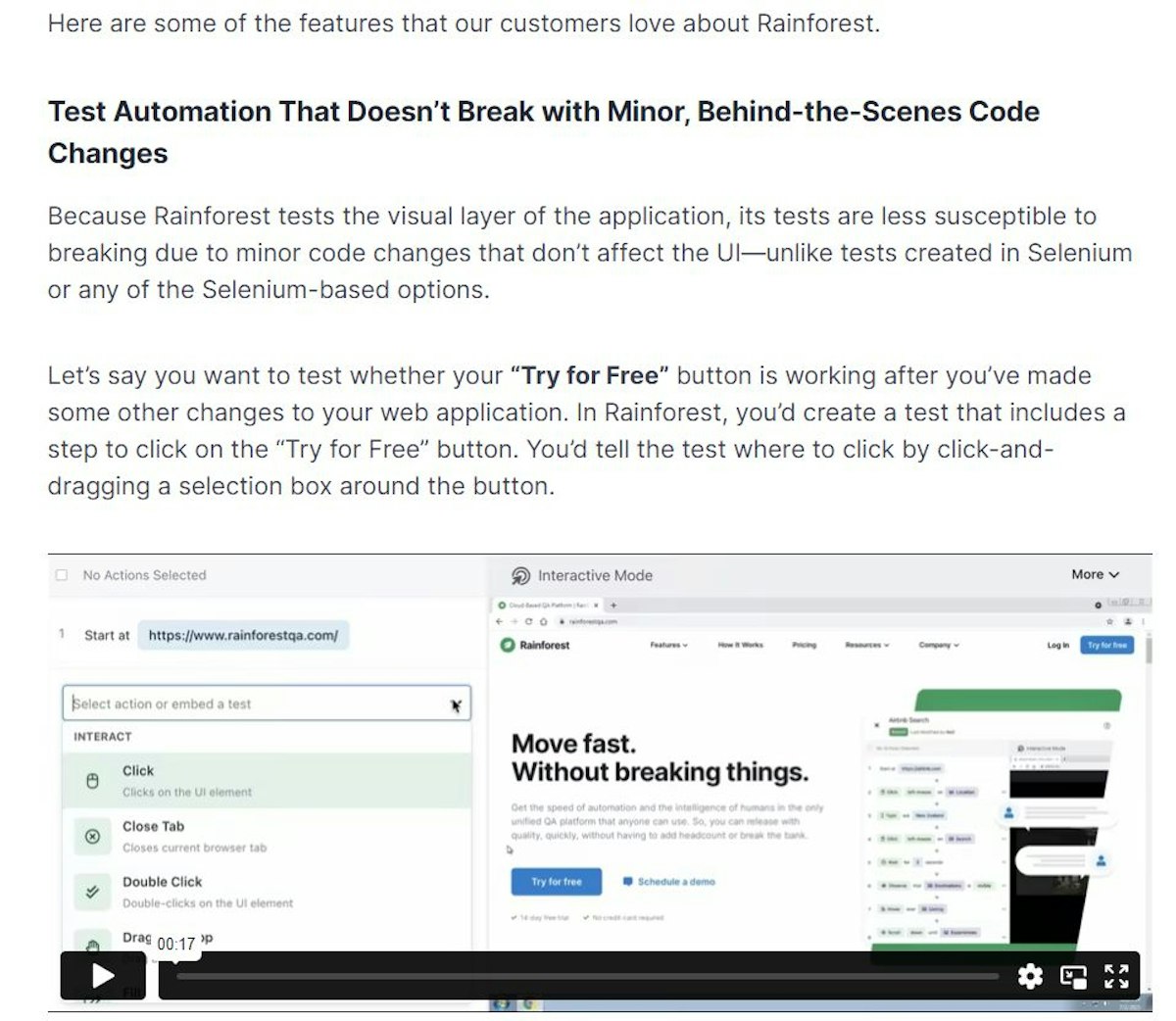
Rainforest, a no-code QA testing tool, also does this. Their article about top automated testing tools ranked no. 1 at the time of writing.
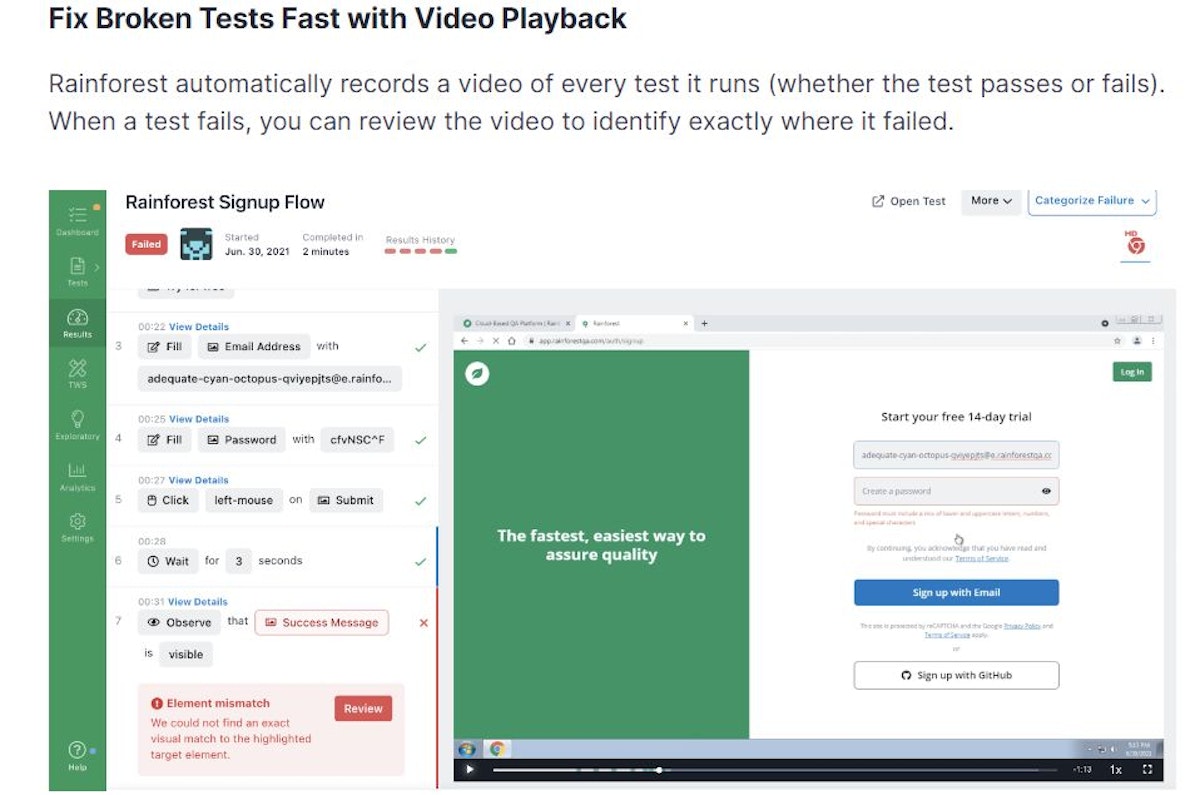
This is because they didn’t simply assert their product’s superiority due to features like “pixel matching” and “video playback for debugging.” Instead, they showed how these features work and why they’re necessary when a user is running UI tests on websites or apps through their no-code software.
They included screenshots and videos like this:
Here’s another clip explaining how their video playback works:
This doesn’t mean you should plug your product into every BOFU piece. You shouldn’t plug it in when it won’t fit naturally. But if it can, insert your product, just like this writer did for Ahrefs.
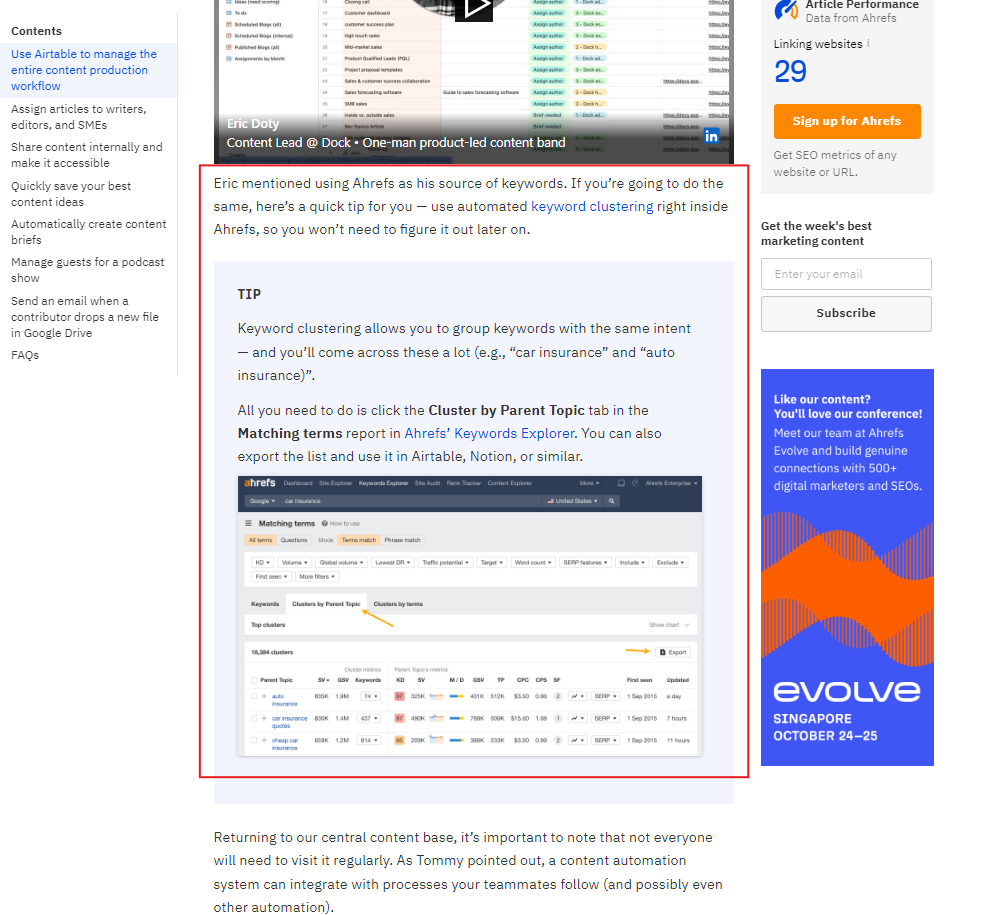
Now, how does this kind of content help the sales team?
Your sales team can include links to these pages while explaining how your product works with leads.
In a Dock case study, the Director of Sales at Nectar mentions that their follow-up emails include demo videos, slides, testimonials, pricing info, and other supporting sales collateral.
That’s because these resources help your leads access all the information they need to make a decision about you. And you don’t need to intervene in this process because your resources are detailed enough, thanks to insights from the sales team and content from your marketers.
3. Create Case Studies/Guides That Show How Existing Customers Use the Product
Interviewing 10 of your best customers is a great way to attract new clients.
Case studies are stories about your clients’ experiences and how you helped them.
It tells the reader about the problem, the client’s process of finding solutions, and how their experience could help other companies.
After all, 75% of marketers use case studies to guide prospects through a buyer’s journey. And that’s because they show how your product works.
More importantly, they show how companies with similar challenges have overcome them using your solution.
Mutiny HQ, a company that uses AI and data to convert website visitors into customers, has a process that works.
More than 90% of their content consists of case studies and playbooks explaining their processes and the importance of their software. Their software creates personalized experiences to “help marketers convert their top-of-funnel demand into revenue,” so they need these case studies and playbooks to show every lead what they do and how they do it. And rightly so, they’re an expensive product ($29,000 to $74,000/annum).
They excel by creating content that their leads need in a format that showcases their expertise and the capabilities of their no-code software. This was likely achieved by involving the sales team throughout the process to gain alignment on the pain points.
Here’s a little overview of their content library:

These are not blog posts. These playbooks and frameworks address pain points and show how their product (or processes) can help their target market achieve their revenue goals faster.
For example, in explaining how to build a revenue-generating ABM program, they explain what their process is and why:
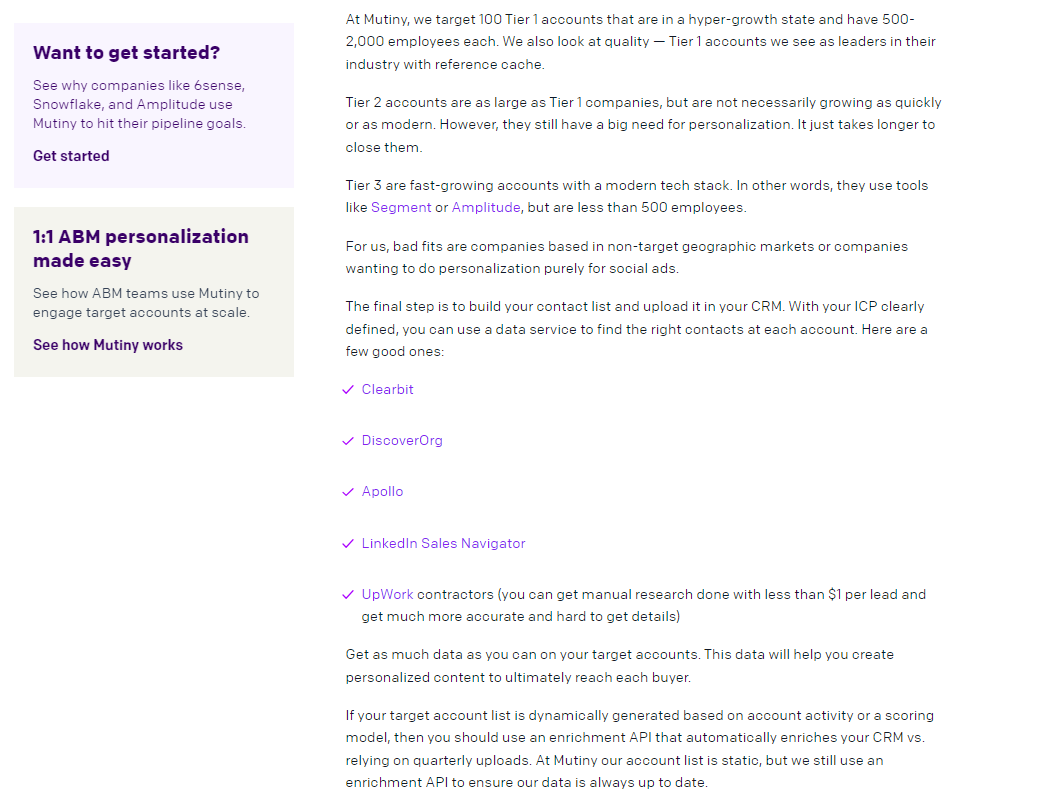
They also have different case studies. They use these to integrate their visitors into the experience they provide their clients.
Another example is Frontify.
They created an in-depth guide, broken into 5 sections, on how to use brand-building software to save money.
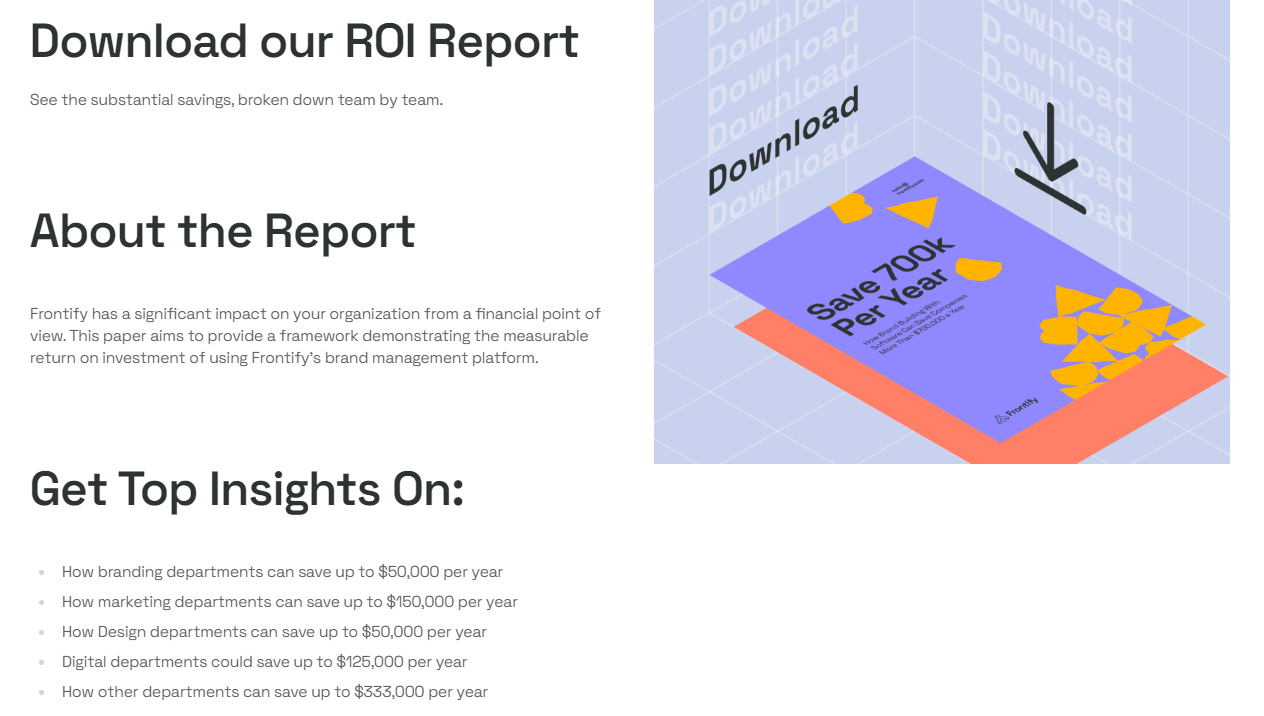
In the guide, they discussed how their product helped their clients and explained how it worked.
Case studies are an important part of the sales process because they provide insights into important features of a product that meet specific use cases.
More importantly, they help prospects understand the experience of other companies and how it relates to theirs. This can increase the product’s perceived value.
So, how do case studies and guides help the sales team?
Frontify generated over 25,000 visits and 550 leads from the long-form guide they produced. Kevin Ailloud, the Head of Demand Generation at Frontify, said the guide “allowed them (sales) to develop conversations with prospects around ROI in a more structured and supportive manner.”
In other words, it made the “selling” easy.
To create a super helpful case study:
-
Focus on the customer’s story.
-
Lean on how your team helped, and
-
Focus on the features + benefits that the customer received.
Read more: How to Write a Case Study (That Actually Closes Deals).
You can also watch Alex Cattoni’s process here:
4. Create Content That Covers All Sales Funnel Stages.
Your content must serve pre-purchase, purchase, and post-purchase purposes. It must create awareness, nurture & engage your prospects, show how your product works, and help them see why you’re the best.
This helps you clear all doubts and encourages your readers to buy.
A marketing leader I can’t remember right now said:
“You need to have content for people who are not yet customers, content for people who are close to becoming customers, and content for people who are already customers.”
This approach describes how your content efforts can help your sales team.
So, create product demos, comparison pages, and tutorials (if your product is quite complex to set up). Create content assets covering everything your users need to know to use your product effectively. This will help prospects in the decision phase decide if they like your product enough to pay for it.
5. Use Data to Inform Your Content Strategy.
Data should inform content strategy. Tracking metrics like engagement rates, bounce rates, and conversion rates (especially on high-value pages) can help you spot which types of content resonate with your audience and how you can optimize your strategy.
After all, Rand Fishkin noted, “The best content is that which speaks to the needs and desires of your audience.”
These content types should also help your sales team, and analyzing your website data can accelerate the strategy of creating helpful content. Here’s what I mean:
-
Data helps you understand your audience and where web traffic comes from. Understanding this helps you distribute more content to those channels so you can increase the overall conversion rate (since those people are interested in your content, and possibly, your software).
-
Data helps you track content performance. By monitoring performance in terms of traffic, engagement, and conversions, you can identify what’s working and what needs to be optimized.
This means you need to ask questions like:
-
Which posts have high conversions?
-
What does conversion look like? Downloads? Sign-ups for a free trial? Newsletter sign-ups? What?
-
Which page is the last touch point that motivated the purchase or request for a demo/sales call?
-
What does the qualitative website audit tell us about user experience? Based on the conversion rate optimization (CRO) audit, how can we use the psychology of colors in our CTA to improve conversions?
These can help refine your content strategy and create compelling content that drives sales.
- Data helps you spot gaps and opportunities. You need to analyze trending keywords and topics to identify gaps in your content library. Then, create content that differentiates your company/product.
For instance, if you’re a marketing agency and everyone is leaning towards AI content writing tools, do a comprehensive case study comparing the quality your team can produce to what AI can do. Grow and Convert did that in this video:
Take it further: publish the pieces and show results on which ones ranked and converted more.
You can share the results of this experiment on LinkedIn and Twitter polls and watch people choose which content resonates with them the most.
This strategy differentiates you and shows your team in action.
I specialize in creating content that meets search intent and increases conversion rates. Let’s work together; book a call here or fill out a form to tell me what I can help with. I look forward to chatting with you soon.
Related Articles
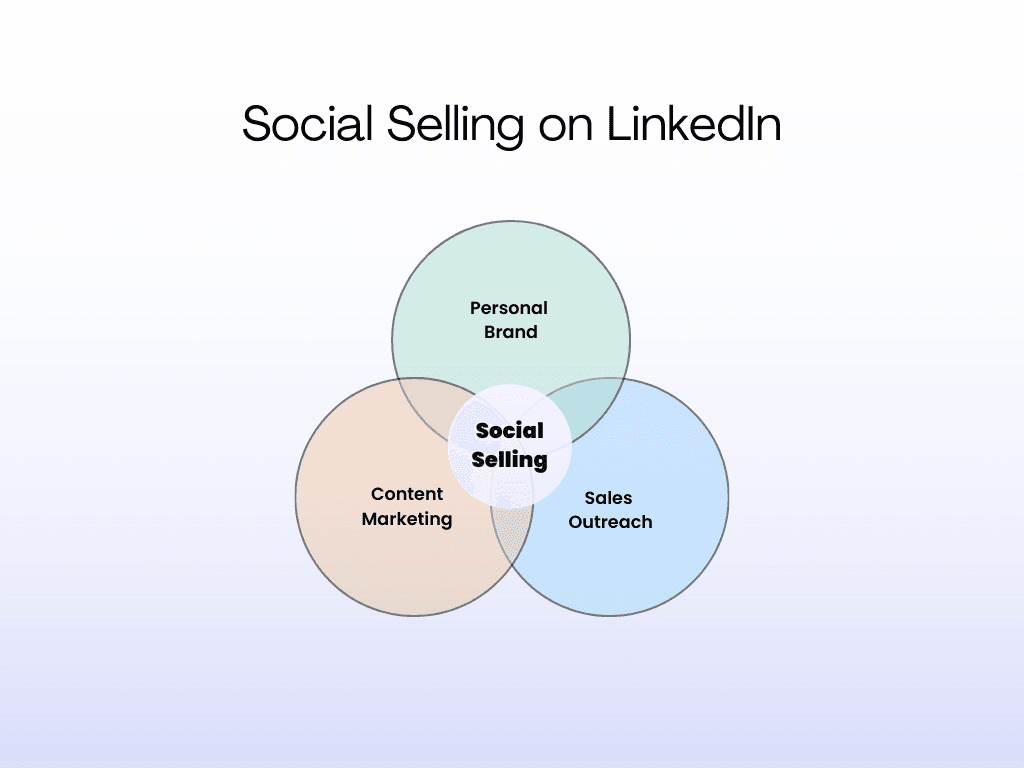
LinkedIn Automation and Social Selling in 2024
Learn how to use LinkedIn for social selling in 2024. These strategies will help you optimize your profile, connect with prospects, and increase sales.
How to Optimize B2B SaaS Content for AEO
Your buyers are already in ChatGPT, asking about your category. Here’s the AEO process I use to optimize B2B SaaS content for answer engines.

What I Learned Vibe-Coding My First App (& Shutting It Down)
I vibe-coded Garde, a recipe & DIY video-to-text app, in November 2025 & shut it down four months later. Here’s what building it taught me.
Comments
Leave a thought, question, or response. Your email stays private. If you use an email linked to Gravatar, your profile image may show automatically.
Loading comments...